Making Enterprise AI Visible
How we built the client's first executive dashboard for ML operations
*Some details in this case study have been changed or omitted to comply with my confidentiality obligations. All sensitive or proprietary information has been fully obfuscated.
Making Enterprise AI Visible
How we built the client's first executive dashboard for ML operations
*Some details in this case study have been changed or omitted to comply with my confidentiality obligations. All sensitive or proprietary information has been fully obfuscated.
Making Enterprise AI Visible
How we built the client's first executive dashboard for ML operations
*Some details in this case study have been changed or omitted to comply with my confidentiality obligations. All sensitive or proprietary information has been fully obfuscated.
Project Overview
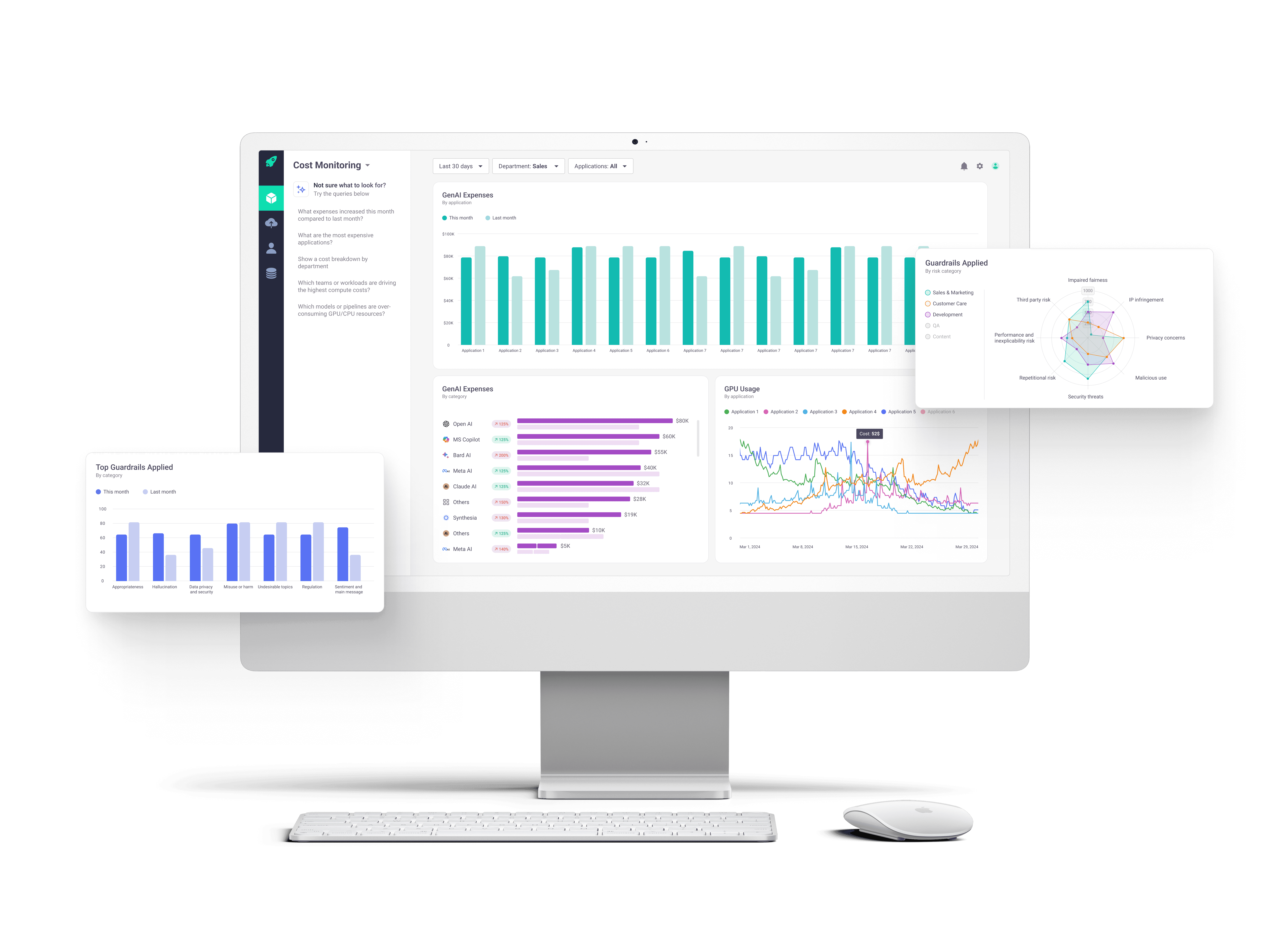
At Kido, our team partnered with the client to design an executive dashboard that consolidates AI/ML performance, risk, usage, and costs into one actionable interface. The product provides executives with a clear, insight-driven surface to make faster, more informed decisions organization-wide.
Kido - strategic design operations partner
Adir Slutski, Ido Zaifman, Karen Segev
Aventra - an MLOps platform building tools for AI/ML observability and operations
Product Design
Product Designer
2024
Product & Strategy
System Design
UX & Interaction Design
Data Visualization
Research & Discovery
Project Overview
At Kido, our team partnered with the client to design an executive dashboard that consolidates AI/ML performance, risk, usage, and costs into one actionable interface. The product provides executives with a clear, insight-driven surface to make faster, more informed decisions organization-wide.
Kido - strategic design operations partner
Adir Slutski, Ido Zaifman, Karen Segev
Aventra - an MLOps platform building tools for AI/ML observability and operations
Product Design
Product Designer
2024
Product & Strategy
System Design
UX & Interaction Design
Data Visualization
Research & Discovery
Project Overview
At Kido, our team partnered with the client to design an executive dashboard that consolidates AI/ML performance, risk, usage, and costs into one actionable interface. The product provides executives with a clear, insight-driven surface to make faster, more informed decisions organization-wide.
Kido - strategic design operations partner
Adir Slutski, Ido Zaifman, Karen Segev
Aventra - an MLOps platform building tools for AI/ML observability and operations
Product Design
Product Designer
2024
Product & Strategy
System Design
UX & Interaction Design
Data Visualization
Research & Discovery
The Problem
Aventra is an MLOps platform that helps large enterprises operationalize and scale AI and ML workloads. Despite heavy usage of AI and ML workloads across the organization:
Leaders had no centralized visibility into model performance, infrastructure usage, or cost.
Different teams used different tools, making reporting fragmented and inconsistent.
There were no defined KPIs, and no shared understanding of what “executive visibility” should look like.
Data sources were complex, inconsistent, and difficult to translate into actionable insights.
Executives were essentially flying blind - relying on manual reports, Slack threads, and siloed dashboards. Kido was brought in as a design partner to define the vision, strategy, and UX for the new product that would solve those issues.
The Problem
Aventra is an MLOps platform that helps large enterprises operationalize and scale AI and ML workloads. Despite heavy usage of AI and ML workloads across the organization:
Leaders had no centralized visibility into model performance, infrastructure usage, or cost.
Different teams used different tools, making reporting fragmented and inconsistent.
There were no defined KPIs, and no shared understanding of what “executive visibility” should look like.
Data sources were complex, inconsistent, and difficult to translate into actionable insights.
Executives were essentially flying blind - relying on manual reports, Slack threads, and siloed dashboards. Kido was brought in as a design partner to define the vision, strategy, and UX for the new product that would solve those issues.
The Problem
Aventra is an MLOps platform that helps large enterprises operationalize and scale AI and ML workloads. Despite heavy usage of AI and ML workloads across the organization:
Leaders had no centralized visibility into model performance, infrastructure usage, or cost.
Different teams used different tools, making reporting fragmented and inconsistent.
There were no defined KPIs, and no shared understanding of what “executive visibility” should look like.
Data sources were complex, inconsistent, and difficult to translate into actionable insights.
Executives were essentially flying blind - relying on manual reports, Slack threads, and siloed dashboards. Kido was brought in as a design partner to define the vision, strategy, and UX for the new product that would solve those issues.
My Role
I was part of the design team responsible for driving the core UX and structure of the dashboard. My work included gathering and organizing requirements, defining the information architecture, conducting research and benchmarking, and developing concept designs and prototypes.
My Role
I was part of the design team responsible for driving the core UX and structure of the dashboard. My work included gathering and organizing requirements, defining the information architecture, conducting research and benchmarking, and developing concept designs and prototypes.
My Role
I was part of the design team responsible for driving the core UX and structure of the dashboard. My work included gathering and organizing requirements, defining the information architecture, conducting research and benchmarking, and developing concept designs and prototypes.
Objective
Through multiple workshops and client conversations, we defined the key goals for the dashboard.
Give leadership a clear picture of:
Resource usage (compute, storage, pipelines, clusters)
Model performance trends and degradation risks
Operational efficiency (throughput, failure rates, SLA adherence)
Cost of AI/ML operations
Adoption & usage of tools across departments
Security & compliance posture
The dashboard had to communicate all of this at a glance, while still letting users drill deeper.
Objective
Through multiple workshops and client conversations, we defined the key goals for the dashboard.
Give leadership a clear picture of:
Resource usage (compute, storage, pipelines, clusters)
Model performance trends and degradation risks
Operational efficiency (throughput, failure rates, SLA adherence)
Cost of AI/ML operations
Adoption & usage of tools across departments
Security & compliance posture
The dashboard had to communicate all of this at a glance, while still letting users drill deeper.
Objective
Through multiple workshops and client conversations, we defined the key goals for the dashboard.
Give leadership a clear picture of:
Resource usage (compute, storage, pipelines, clusters)
Model performance trends and degradation risks
Operational efficiency (throughput, failure rates, SLA adherence)
Cost of AI/ML operations
Adoption & usage of tools across departments
Security & compliance posture
The dashboard had to communicate all of this at a glance, while still letting users drill deeper.
Research & Benchmarking
To ensure the dashboard met enterprise-level expectations, we benchmarked:
Metrics and observability tools
Best practices for executive analytics dashboards
This research helped us validate which data belonged at the executive level and what could remain in deeper operational screens.
Research & Benchmarking
To ensure the dashboard met enterprise-level expectations, we benchmarked:
Metrics and observability tools
Best practices for executive analytics dashboards
This research helped us validate which data belonged at the executive level and what could remain in deeper operational screens.
Research & Benchmarking
To ensure the dashboard met enterprise-level expectations, we benchmarked:
Metrics and observability tools
Best practices for executive analytics dashboards
This research helped us validate which data belonged at the executive level and what could remain in deeper operational screens.
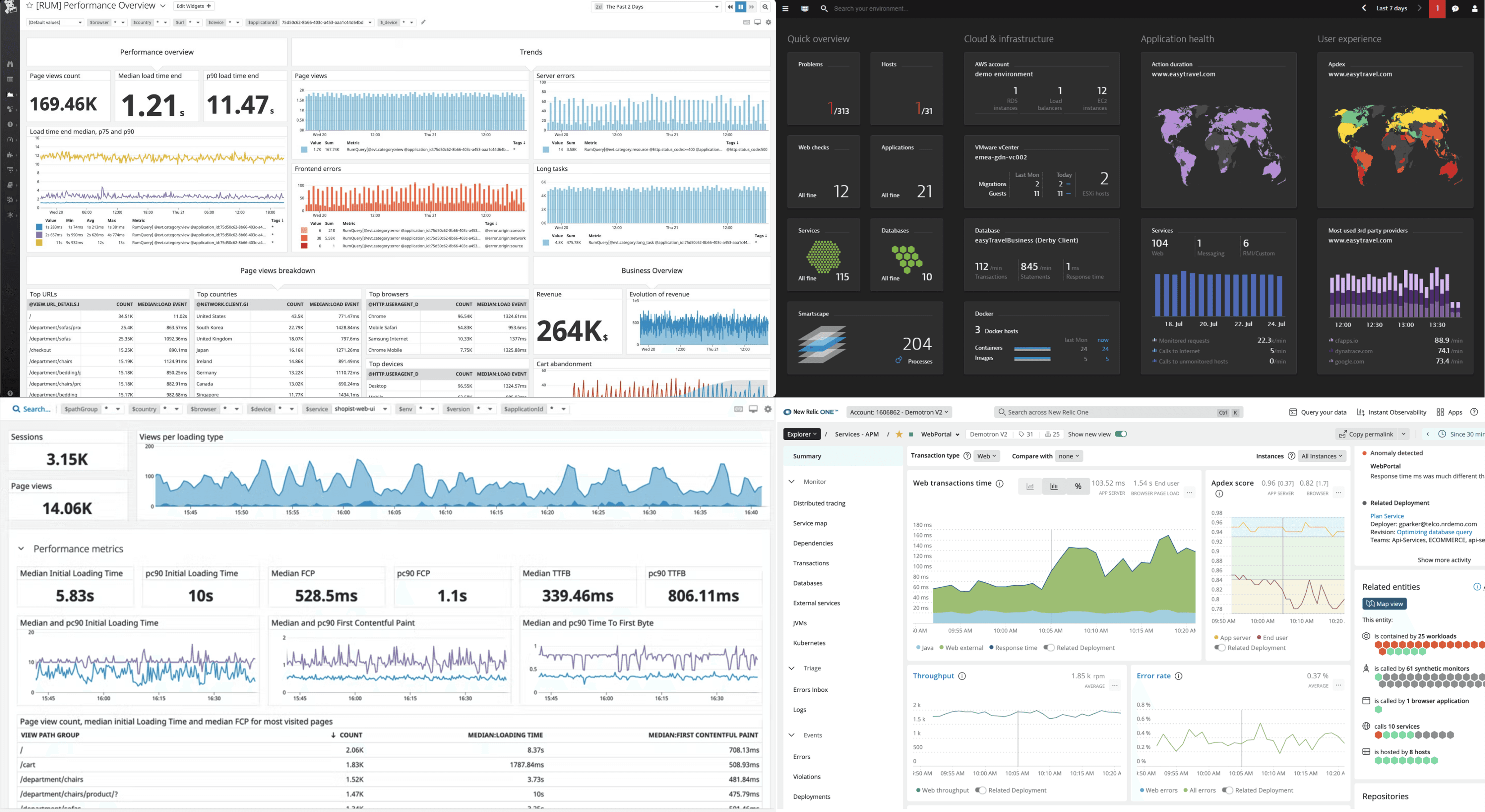
Research and benchmarking examples
Research and benchmarking examples
Research and benchmarking examples
Concept Exploration
We mapped all the challenges and information flows, and identified the need to organize the dashboard into multiple views to address different executive needs. The resulting structure focuses on costs, risks, and productivity monitoring, ensuring that each view surfaces the most relevant metrics clearly.
We explored multiple directions for the dashboard, testing variations in:
KPI layout and prioritization
Risk and anomaly indicators
Time-based trend patterns
Card-based summary blocks
Through iterative reviews with stakeholders, we converged on a layout that balanced clarity, scanability, and depth.
Concept Exploration
We mapped all the challenges and information flows, and identified the need to organize the dashboard into multiple views to address different executive needs. The resulting structure focuses on costs, risks, and productivity monitoring, ensuring that each view surfaces the most relevant metrics clearly.
We explored multiple directions for the dashboard, testing variations in:
KPI layout and prioritization
Risk and anomaly indicators
Time-based trend patterns
Card-based summary blocks
Through iterative reviews with stakeholders, we converged on a layout that balanced clarity, scanability, and depth.
Concept Exploration
We mapped all the challenges and information flows, and identified the need to organize the dashboard into multiple views to address different executive needs. The resulting structure focuses on costs, risks, and productivity monitoring, ensuring that each view surfaces the most relevant metrics clearly.
We explored multiple directions for the dashboard, testing variations in:
KPI layout and prioritization
Risk and anomaly indicators
Time-based trend patterns
Card-based summary blocks
Through iterative reviews with stakeholders, we converged on a layout that balanced clarity, scanability, and depth.
Concept Development
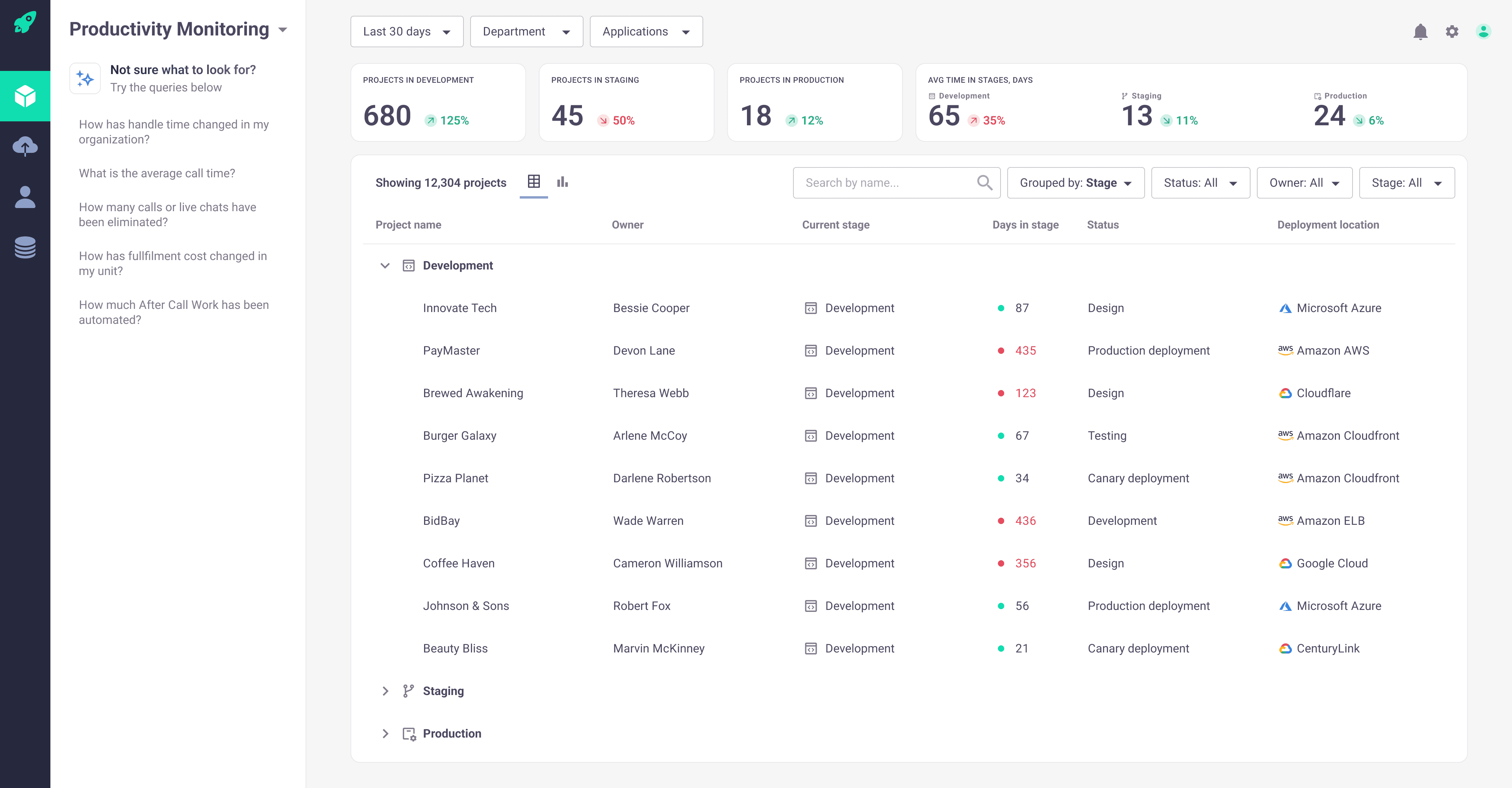
The dashboard was integrated into the existing application shell and featured a clean layout with widgets, a filter bar, and a sidebar for navigation. The sidebar included a smart filters panel, offering natural-language questions to guide users - helping those unfamiliar with the system quickly find insights and improving onboarding and engagement.
Concept Development
The dashboard was integrated into the existing application shell and featured a clean layout with widgets, a filter bar, and a sidebar for navigation. The sidebar included a smart filters panel, offering natural-language questions to guide users - helping those unfamiliar with the system quickly find insights and improving onboarding and engagement.
Concept Development
The dashboard was integrated into the existing application shell and featured a clean layout with widgets, a filter bar, and a sidebar for navigation. The sidebar included a smart filters panel, offering natural-language questions to guide users - helping those unfamiliar with the system quickly find insights and improving onboarding and engagement.
Concept Development
As the dashboard evolved, we realized the sidebar navigation needed to be shortened. To avoid overwhelming users, we replaced the long sidebar with a dropdown menu, improving clarity and making navigation more convenient.
Concept Development
As the dashboard evolved, we realized the sidebar navigation needed to be shortened. To avoid overwhelming users, we replaced the long sidebar with a dropdown menu, improving clarity and making navigation more convenient.
Concept Development
As the dashboard evolved, we realized the sidebar navigation needed to be shortened. To avoid overwhelming users, we replaced the long sidebar with a dropdown menu, improving clarity and making navigation more convenient.
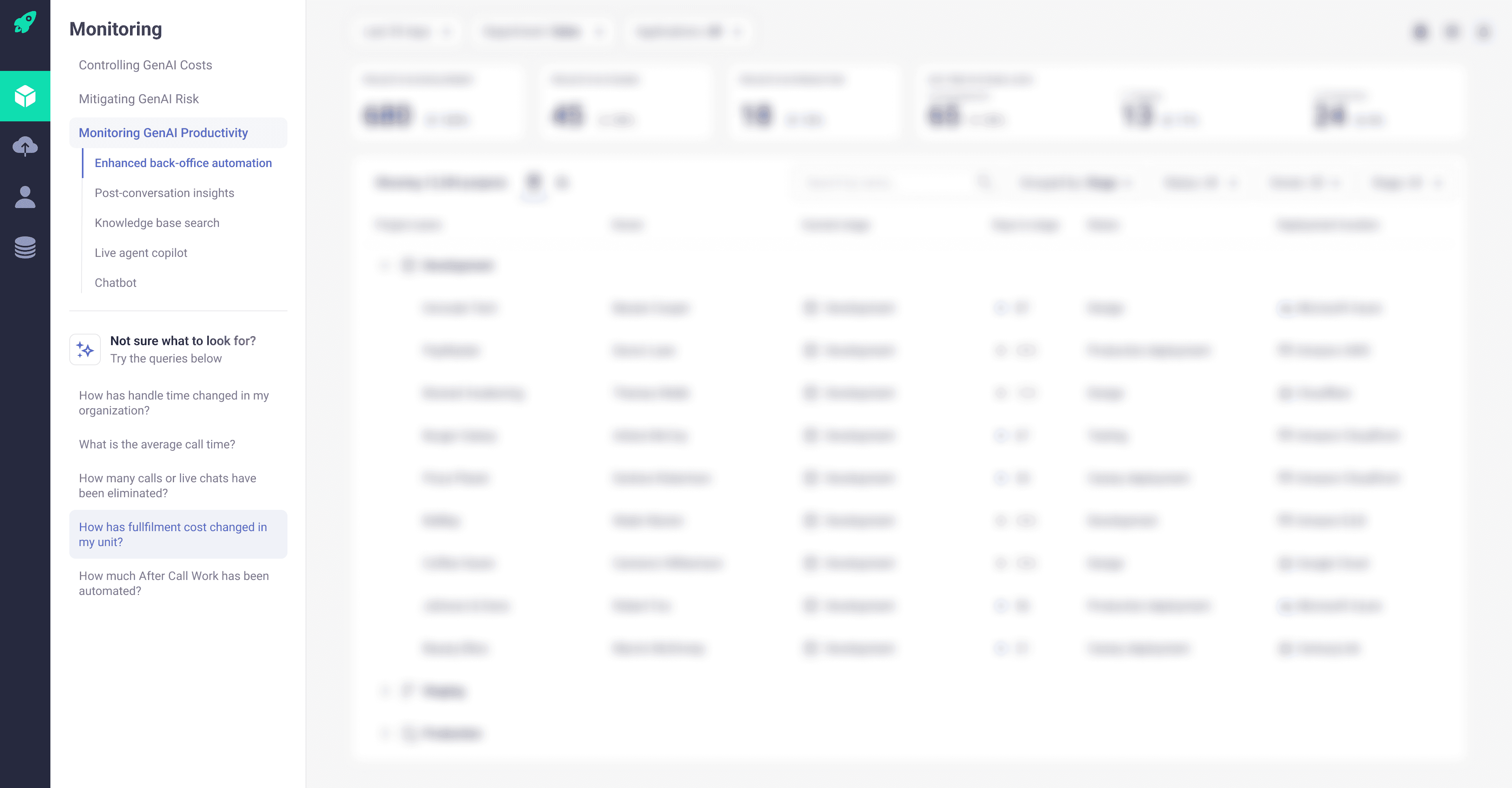
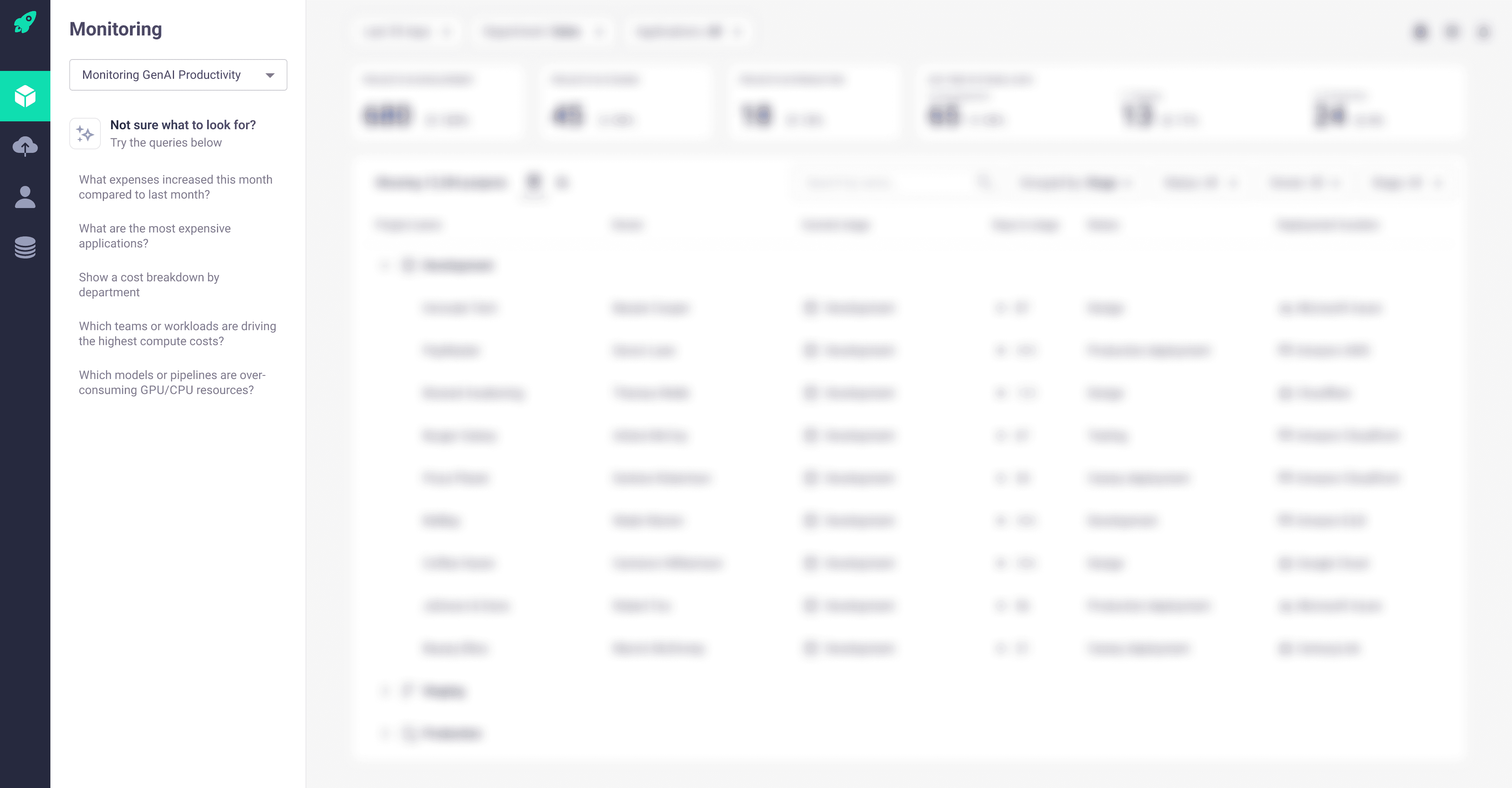
We replaced the long sidebar with a dropdown to reduce clutter and make navigation clearer.
We replaced the long sidebar with a dropdown to reduce clutter and make navigation clearer.
We replaced the long sidebar with a dropdown to reduce clutter and make navigation clearer.
Data Visualization
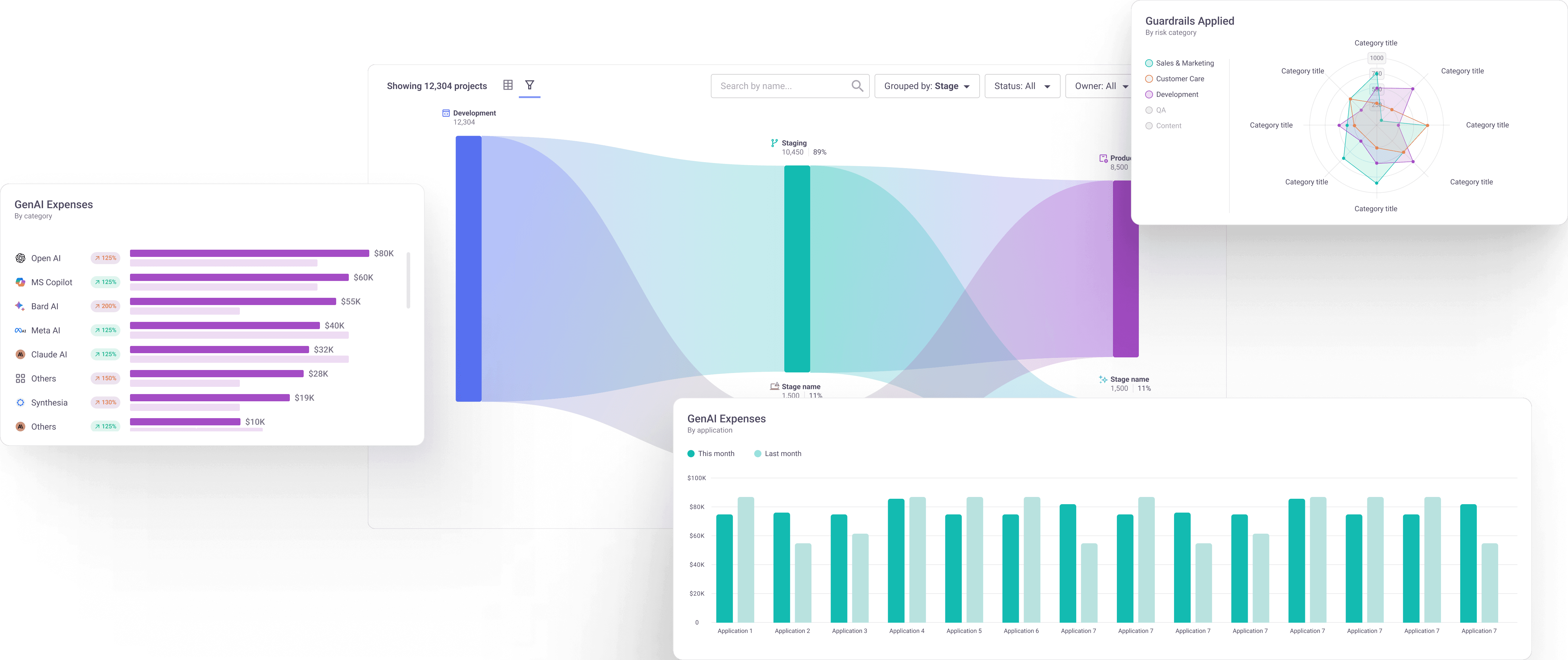
We designed a set of visual patterns tailored to AI/ML operations, including:
Performance trend graphs
Infra usage counters
Cost distribution charts
Visualizations were optimized for fast executive scanning while still supporting deeper analysis.
Data Visualization
We designed a set of visual patterns tailored to AI/ML operations, including:
Performance trend graphs
Infra usage counters
Cost distribution charts
Visualizations were optimized for fast executive scanning while still supporting deeper analysis.
Data Visualization
We designed a set of visual patterns tailored to AI/ML operations, including:
Performance trend graphs
Infra usage counters
Cost distribution charts
Visualizations were optimized for fast executive scanning while still supporting deeper analysis.
Final Solution
The final dashboard brought together multiple insights into a single, executive-focused interface, designed to provide clarity across AI/ML operations.
Key elements included:
Multi-view layout: separate views for Costs, Risks, and Productivity Monitoring, each surfacing the most relevant KPIs for decision-making.
Widgets and visualizations: trend charts, risk indicators, and cost distribution panels allowed executives to quickly grasp operational health.
Smart filters panel: natural-language questions guided users who were unfamiliar with the data, helping them explore the dashboard and uncover insights without prior knowledge.
Dropdown navigation: the first sidebar was replaced with a dropdown menu, simplifying navigation and keeping the interface clean.
Scalable design system components: cards, metric blocks, and charts were standardized to support future dashboards and other analytics surfaces.
Final Solution
The final dashboard brought together multiple insights into a single, executive-focused interface, designed to provide clarity across AI/ML operations.
Key elements included:
Multi-view layout: separate views for Costs, Risks, and Productivity Monitoring, each surfacing the most relevant KPIs for decision-making.
Widgets and visualizations: trend charts, risk indicators, and cost distribution panels allowed executives to quickly grasp operational health.
Smart filters panel: natural-language questions guided users who were unfamiliar with the data, helping them explore the dashboard and uncover insights without prior knowledge.
Dropdown navigation: the first sidebar was replaced with a dropdown menu, simplifying navigation and keeping the interface clean.
Scalable design system components: cards, metric blocks, and charts were standardized to support future dashboards and other analytics surfaces.
Final Solution
The final dashboard brought together multiple insights into a single, executive-focused interface, designed to provide clarity across AI/ML operations.
Key elements included:
Multi-view layout: separate views for Costs, Risks, and Productivity Monitoring, each surfacing the most relevant KPIs for decision-making.
Widgets and visualizations: trend charts, risk indicators, and cost distribution panels allowed executives to quickly grasp operational health.
Smart filters panel: natural-language questions guided users who were unfamiliar with the data, helping them explore the dashboard and uncover insights without prior knowledge.
Dropdown navigation: the first sidebar was replaced with a dropdown menu, simplifying navigation and keeping the interface clean.
Scalable design system components: cards, metric blocks, and charts were standardized to support future dashboards and other analytics surfaces.
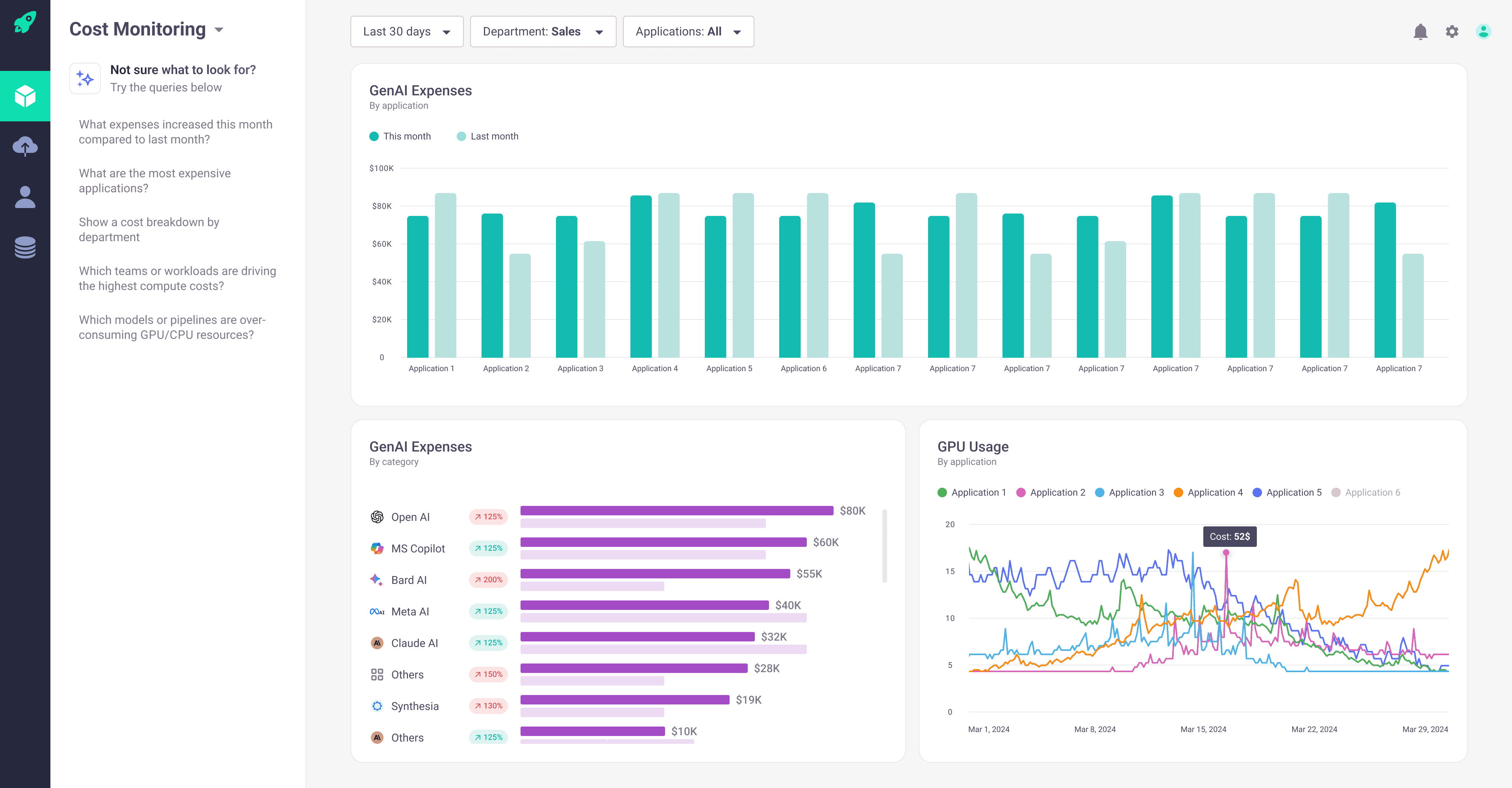
Monitoring costs dashboard
Monitoring costs dashboard
Monitoring costs dashboard
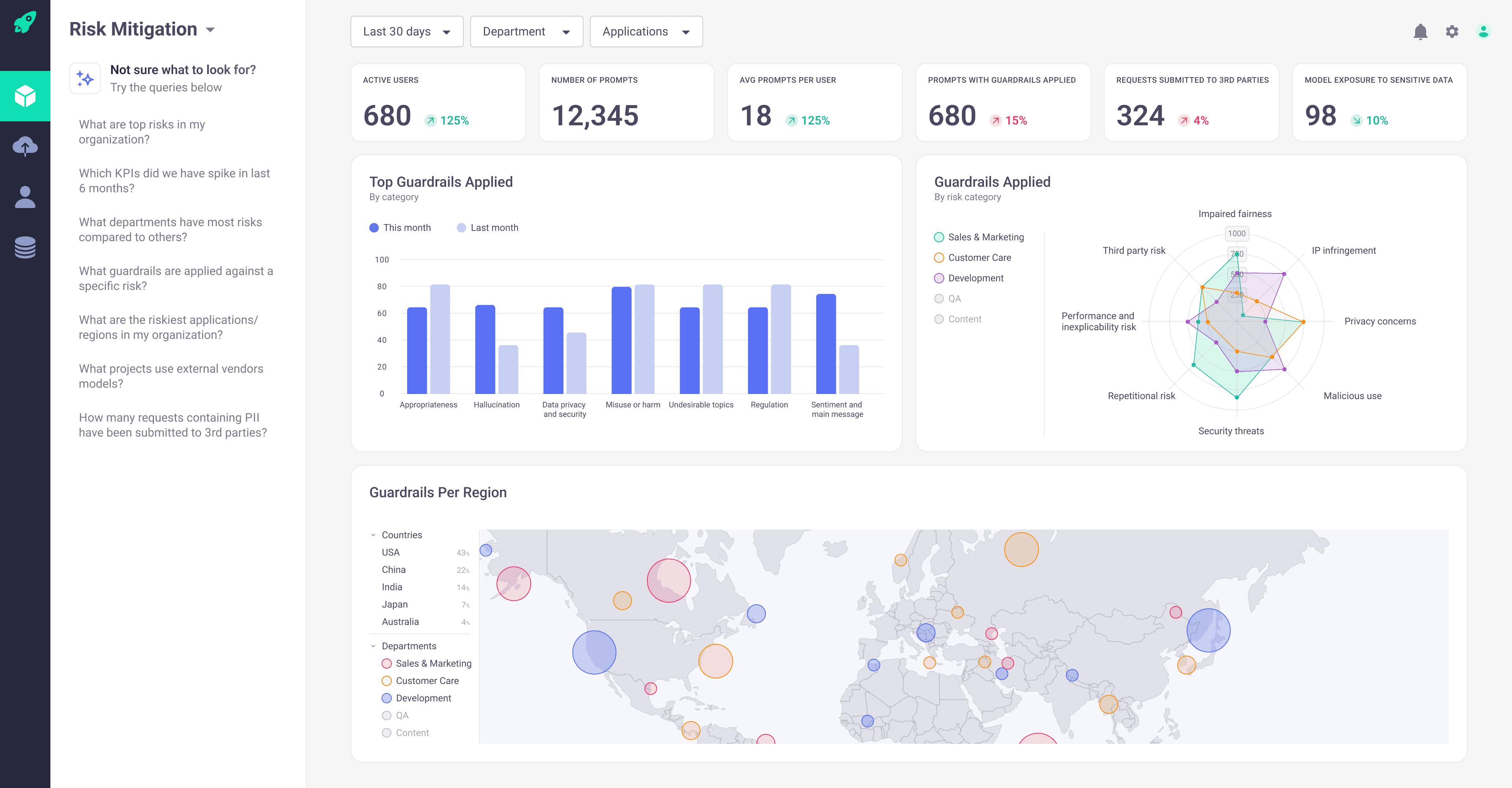
Risks dashboard
Risks dashboard
Risks dashboard
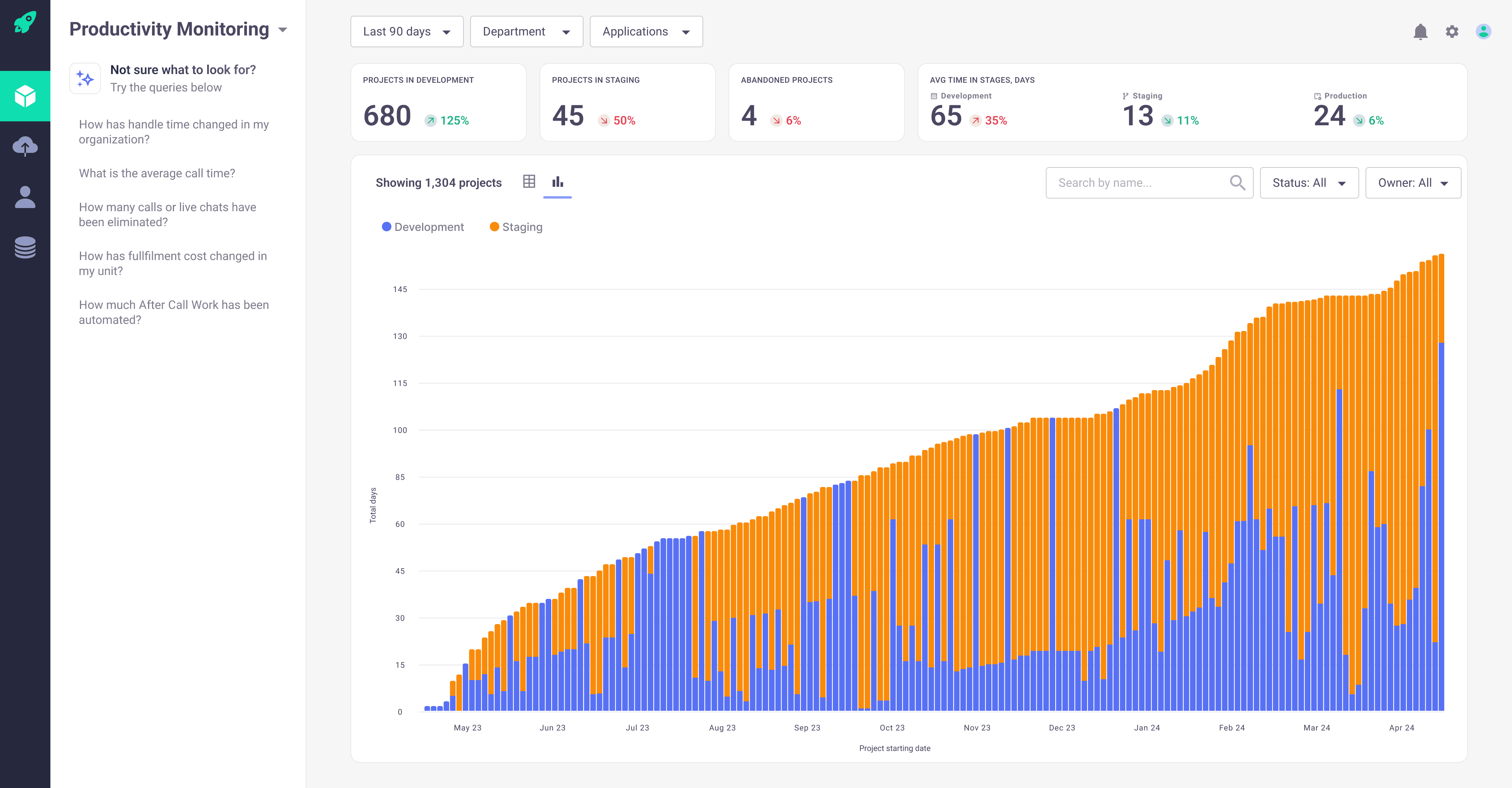
Productivity dashboard
Productivity dashboard
Productivity dashboard
Results & Impact
The dashboard was envisioned as a single source of truth for executives, translating complex AI/ML telemetry into clear, actionable insights. Its design aimed to improve visibility across operations, support onboarding for new users, and lay the groundwork for future analytics products within the company.
Even at the concept stage, the executive dashboard was designed to deliver strategic value:
Organizational alignment: aimed to establish a shared understanding of KPIs and metrics for executives, data teams, and engineers.
Roadmap clarity: intended to help prioritize the MVP and guide development focus for the engineering team.
Stakeholder engagement: created a tangible concept for leadership to facilitate alignment and confidence in the product vision.
Guided exploration: smart filters and intuitive layout were planned to support new users in navigating complex AI/ML operations.
Results & Impact
The dashboard was envisioned as a single source of truth for executives, translating complex AI/ML telemetry into clear, actionable insights. Its design aimed to improve visibility across operations, support onboarding for new users, and lay the groundwork for future analytics products within the company.
Even at the concept stage, the executive dashboard was designed to deliver strategic value:
Organizational alignment: aimed to establish a shared understanding of KPIs and metrics for executives, data teams, and engineers.
Roadmap clarity: intended to help prioritize the MVP and guide development focus for the engineering team.
Stakeholder engagement: created a tangible concept for leadership to facilitate alignment and confidence in the product vision.
Guided exploration: smart filters and intuitive layout were planned to support new users in navigating complex AI/ML operations.
Results & Impact
The dashboard was envisioned as a single source of truth for executives, translating complex AI/ML telemetry into clear, actionable insights. Its design aimed to improve visibility across operations, support onboarding for new users, and lay the groundwork for future analytics products within the company.
Even at the concept stage, the executive dashboard was designed to deliver strategic value:
Organizational alignment: aimed to establish a shared understanding of KPIs and metrics for executives, data teams, and engineers.
Roadmap clarity: intended to help prioritize the MVP and guide development focus for the engineering team.
Stakeholder engagement: created a tangible concept for leadership to facilitate alignment and confidence in the product vision.
Guided exploration: smart filters and intuitive layout were planned to support new users in navigating complex AI/ML operations.
Reflection
This experience strengthened my ability to translate complex technical data into intuitive, insight-driven interfaces while aligning product, design, and business goals.
Key takeaways:
Balancing simplicity and complexity: designing for executives required presenting complex AI/ML data in a way that was clear, actionable, and scannable, without losing critical insights.
Iterative exploration matters: multiple concept iterations and sessions with stakeholders helped refine the information architecture, visualizations, and navigation.
Collaboration drives success: close partnership with PMs, and engineers ensured feasibility, technical alignment, and shared understanding.
Reflection
This experience strengthened my ability to translate complex technical data into intuitive, insight-driven interfaces while aligning product, design, and business goals.
Key takeaways:
Balancing simplicity and complexity: designing for executives required presenting complex AI/ML data in a way that was clear, actionable, and scannable, without losing critical insights.
Iterative exploration matters: multiple concept iterations and sessions with stakeholders helped refine the information architecture, visualizations, and navigation.
Collaboration drives success: close partnership with PMs, and engineers ensured feasibility, technical alignment, and shared understanding.
Reflection
This experience strengthened my ability to translate complex technical data into intuitive, insight-driven interfaces while aligning product, design, and business goals.
Key takeaways:
Balancing simplicity and complexity: designing for executives required presenting complex AI/ML data in a way that was clear, actionable, and scannable, without losing critical insights.
Iterative exploration matters: multiple concept iterations and sessions with stakeholders helped refine the information architecture, visualizations, and navigation.
Collaboration drives success: close partnership with PMs, and engineers ensured feasibility, technical alignment, and shared understanding.
Made with ❤️ In Israel © 2025 Julia Skigar. All rights reserved.
Made with ❤️ In Israel © 2025 Julia Skigar. All rights reserved.
Made with ❤️ In Israel © 2025 Julia Skigar. All rights reserved.