One System, 150 Brands: Amdocs Case Study
Transforming Amdocs’ design operations by migrating to Figma and building a scalable system to deliver 150+ brands efficiently.
One System, 150 Brands: Amdocs Case Study
Transforming Amdocs’ design operations by migrating to Figma and building a scalable system to deliver 150+ brands efficiently.
One System, 150 Brands: Amdocs Case Study
Transforming Amdocs’ design operations by migrating to Figma and building a scalable system to deliver 150+ brands efficiently.
Project Overview
This project was delivered with Kido team, including system designers and engineers - a complex but genuinely fun challenge, built through close collaboration and smart experimentation.
Kido - strategic design operations partner
Eti Leifer Sharvit, Shaked Shay, Dmitri Dmitriyev, Ido Zaifman
Amdocs - global communications & media software & services provider
Design system migration and scaling
Project Owner, System Designer
Q2-Q3 2023
Design System
Variables
Governance
Education & Training
Design Ops
Project Overview
This project was delivered with Kido team, including system designers and engineers - a complex but genuinely fun challenge, built through close collaboration and smart experimentation.
Kido - strategic design operations partner
Eti Leifer Sharvit, Shaked Shay, Dmitri Dmitriyev, Ido Zaifman
Amdocs - global communications & media software & services provider
Design system migration and scaling
Project Owner, System Designer
Q2-Q3 2023
Design System
Variables
Governance
Education & Training
Design Ops
Project Overview
This project was delivered with Kido team, including system designers and engineers - a complex but genuinely fun challenge, built through close collaboration and smart experimentation.
Kido - strategic design operations partner
Eti Leifer Sharvit, Shaked Shay, Dmitri Dmitriyev, Ido Zaifman
Amdocs - global communications & media software & services provider
Design system migration and scaling
Project Owner, System Designer
Q2-Q3 2023
Design System
Variables
Governance
Education & Training
Design Ops
The Challenge
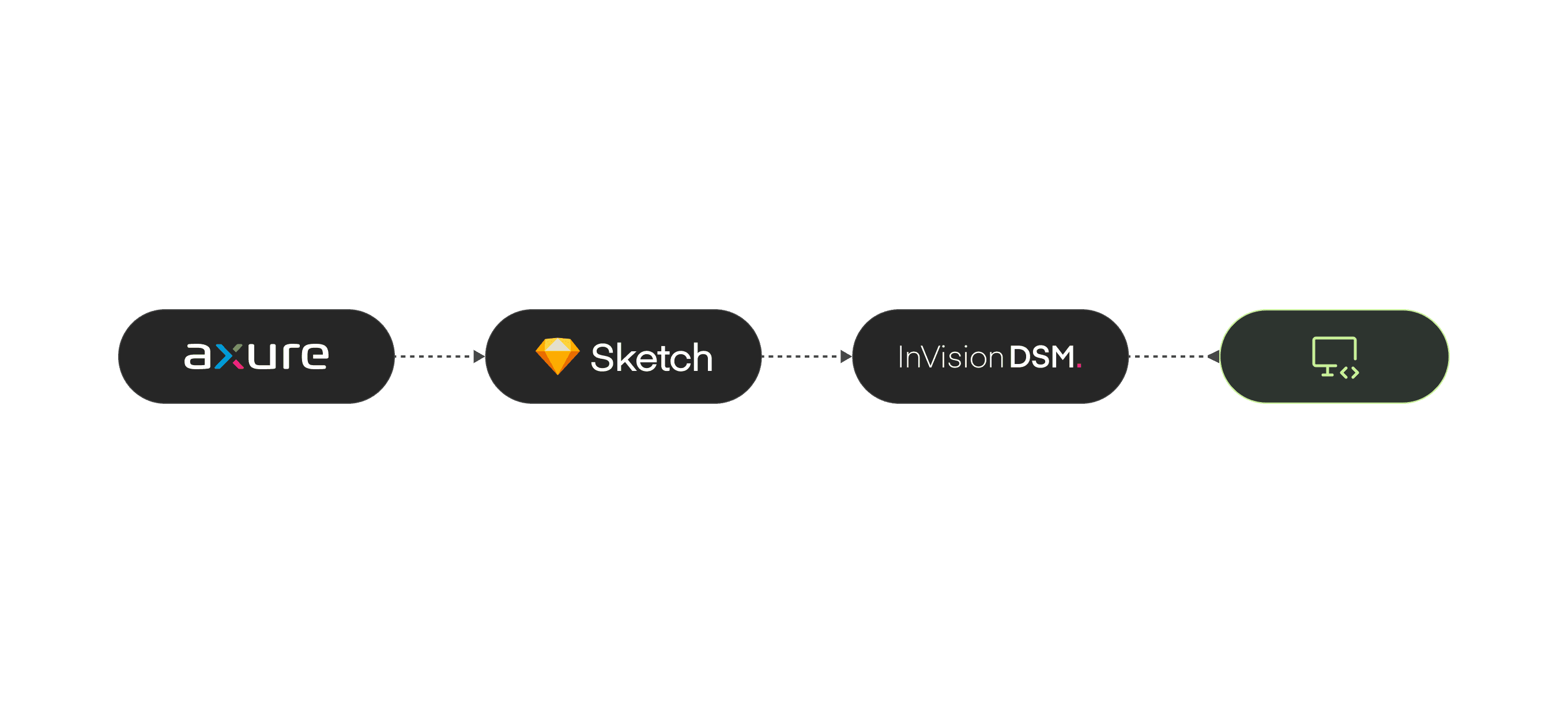
Amdocs’ design infrastructure relied on multiple disconnected tools - Axure for UX and prototyping, InVision for documentation, Sketch and InVision DSM for design - which slowed workflows and made collaboration difficult. With over 70 designers spread across Israel and India, finding a single source of truth was a constant challenge, and significant back-and-forth was needed to ship new designs. On top of that, the team had to support around 150 new brands each year, including light and dark mode, adding even more complexity to already fragmented tools and processes.
The Challenge
Amdocs’ design infrastructure relied on multiple disconnected tools - Axure for UX and prototyping, InVision for documentation, Sketch and InVision DSM for design - which slowed workflows and made collaboration difficult. With over 70 designers spread across Israel and India, finding a single source of truth was a constant challenge, and significant back-and-forth was needed to ship new designs. On top of that, the team had to support around 150 new brands each year, including light and dark mode, adding even more complexity to already fragmented tools and processes.
The Challenge
Amdocs’ design infrastructure relied on multiple disconnected tools - Axure for UX and prototyping, InVision for documentation, Sketch and InVision DSM for design - which slowed workflows and made collaboration difficult. With over 70 designers spread across Israel and India, finding a single source of truth was a constant challenge, and significant back-and-forth was needed to ship new designs. On top of that, the team had to support around 150 new brands each year, including light and dark mode, adding even more complexity to already fragmented tools and processes.
My Role
I led the migration of Amdocs’ design system from multiple legacy tools to Figma as the project owner, while also acting as the hands-on designer. I was responsible for variables research, testing and setup, design system planning and validating the migrated components, working closely with a team of 4 designers and one UX engineer, with invaluable guidance from my managers. I also was part of the Figma training sessions for 70+ designers, working with my colleagues Ido Zaifman and Eti Leifer Sharvit.
My Role
I led the migration of Amdocs’ design system from multiple legacy tools to Figma as the project owner, while also acting as the hands-on designer. I was responsible for variables research, testing and setup, design system planning and validating the migrated components, working closely with a team of 4 designers and one UX engineer, with invaluable guidance from my managers. I also was part of the Figma training sessions for 70+ designers, working with my colleagues Ido Zaifman and Eti Leifer Sharvit.
My Role
I led the migration of Amdocs’ design system from multiple legacy tools to Figma as the project owner, while also acting as the hands-on designer. I was responsible for variables research, testing and setup, design system planning and validating the migrated components, working closely with a team of 4 designers and one UX engineer, with invaluable guidance from my managers. I also was part of the Figma training sessions for 70+ designers, working with my colleagues Ido Zaifman and Eti Leifer Sharvit.
Discovery
We began with a thorough discovery phase - conducting team interviews, reviewing existing files, and mapping current workflows to uncover key pain points and inefficiencies. From there, a list of challenges was distilled to the following:
Consolidate all design tools and transfer them to Figma
Create one library of base components for all brands
Implement a painless solution for theming and multi-brand design components
Create cross-team Figma infrastructure
Streamline documentation creation and maintenance processes
Train and support design teams in using Figma in day to day activities
Tight deadline - 3 months to deliver the end result
Discovery
We began with a thorough discovery phase - conducting team interviews, reviewing existing files, and mapping current workflows to uncover key pain points and inefficiencies. From there, a list of challenges was distilled to the following:
Consolidate all design tools and transfer them to Figma
Create one library of base components for all brands
Implement a painless solution for theming and multi-brand design components
Create cross-team Figma infrastructure
Streamline documentation creation and maintenance processes
Train and support design teams in using Figma in day to day activities
Tight deadline - 3 months to deliver the end result
Discovery
We began with a thorough discovery phase - conducting team interviews, reviewing existing files, and mapping current workflows to uncover key pain points and inefficiencies. From there, a list of challenges was distilled to the following:
Consolidate all design tools and transfer them to Figma
Create one library of base components for all brands
Implement a painless solution for theming and multi-brand design components
Create cross-team Figma infrastructure
Streamline documentation creation and maintenance processes
Train and support design teams in using Figma in day to day activities
Tight deadline - 3 months to deliver the end result
The Process
Once we moved into execution, the priority was to build components that were both scalable and adaptable to multiple use cases. The slot approach became essential - it allowed teams to customize layouts and flows without breaking the system’s core structure.
The Process
Once we moved into execution, the priority was to build components that were both scalable and adaptable to multiple use cases. The slot approach became essential - it allowed teams to customize layouts and flows without breaking the system’s core structure.
The Process
Once we moved into execution, the priority was to build components that were both scalable and adaptable to multiple use cases. The slot approach became essential - it allowed teams to customize layouts and flows without breaking the system’s core structure.
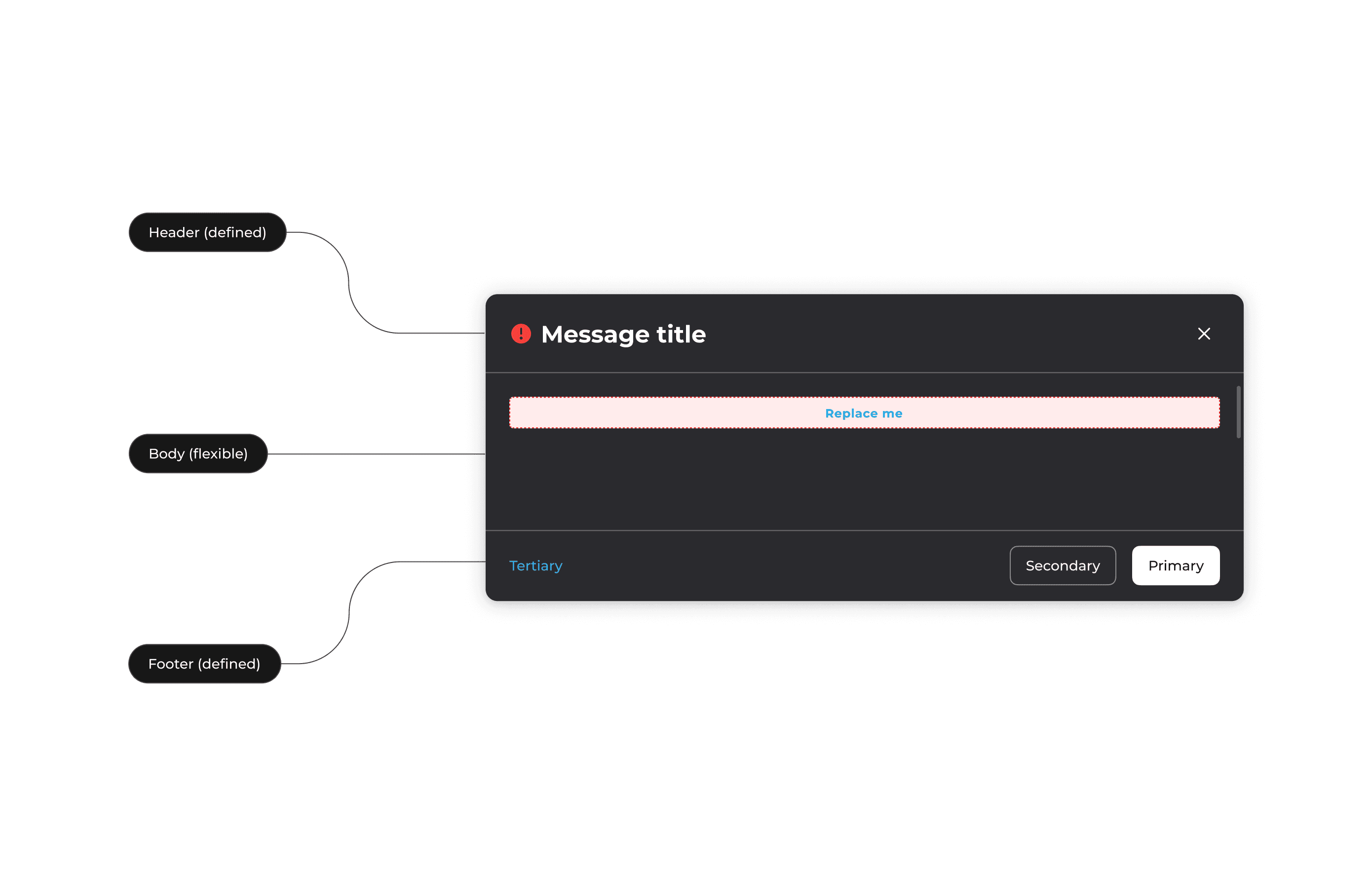
Example of flexible component created with slots. The body content allows flexibility and new solutions.
Example of flexible component created with slots. The body content allows flexibility and new solutions.
Example of flexible component created with slots. The body content allows flexibility and new solutions.
The Process
As components were being migrated, we investigated ways to streamline multi-brand design. Token Studio was an option, but when Figma introduced native variables at Config 2023, we opted for the safer, built-in solution. We then dove deep into experimenting with variables to make it work efficiently for our system.
The challenge was managing variables that had different scopes: some were global and consistent across all brands, while others were brand-specific and needed to be dynamic and customizable. All of this was done while working with a brand-new, largely unexplored feature, which added an extra layer of complexity to the implementation.
The Process
As components were being migrated, we investigated ways to streamline multi-brand design. Token Studio was an option, but when Figma introduced native variables at Config 2023, we opted for the safer, built-in solution. We then dove deep into experimenting with variables to make it work efficiently for our system.
The challenge was managing variables that had different scopes: some were global and consistent across all brands, while others were brand-specific and needed to be dynamic and customizable. All of this was done while working with a brand-new, largely unexplored feature, which added an extra layer of complexity to the implementation.
The Process
As components were being migrated, we investigated ways to streamline multi-brand design. Token Studio was an option, but when Figma introduced native variables at Config 2023, we opted for the safer, built-in solution. We then dove deep into experimenting with variables to make it work efficiently for our system.
The challenge was managing variables that had different scopes: some were global and consistent across all brands, while others were brand-specific and needed to be dynamic and customizable. All of this was done while working with a brand-new, largely unexplored feature, which added an extra layer of complexity to the implementation.
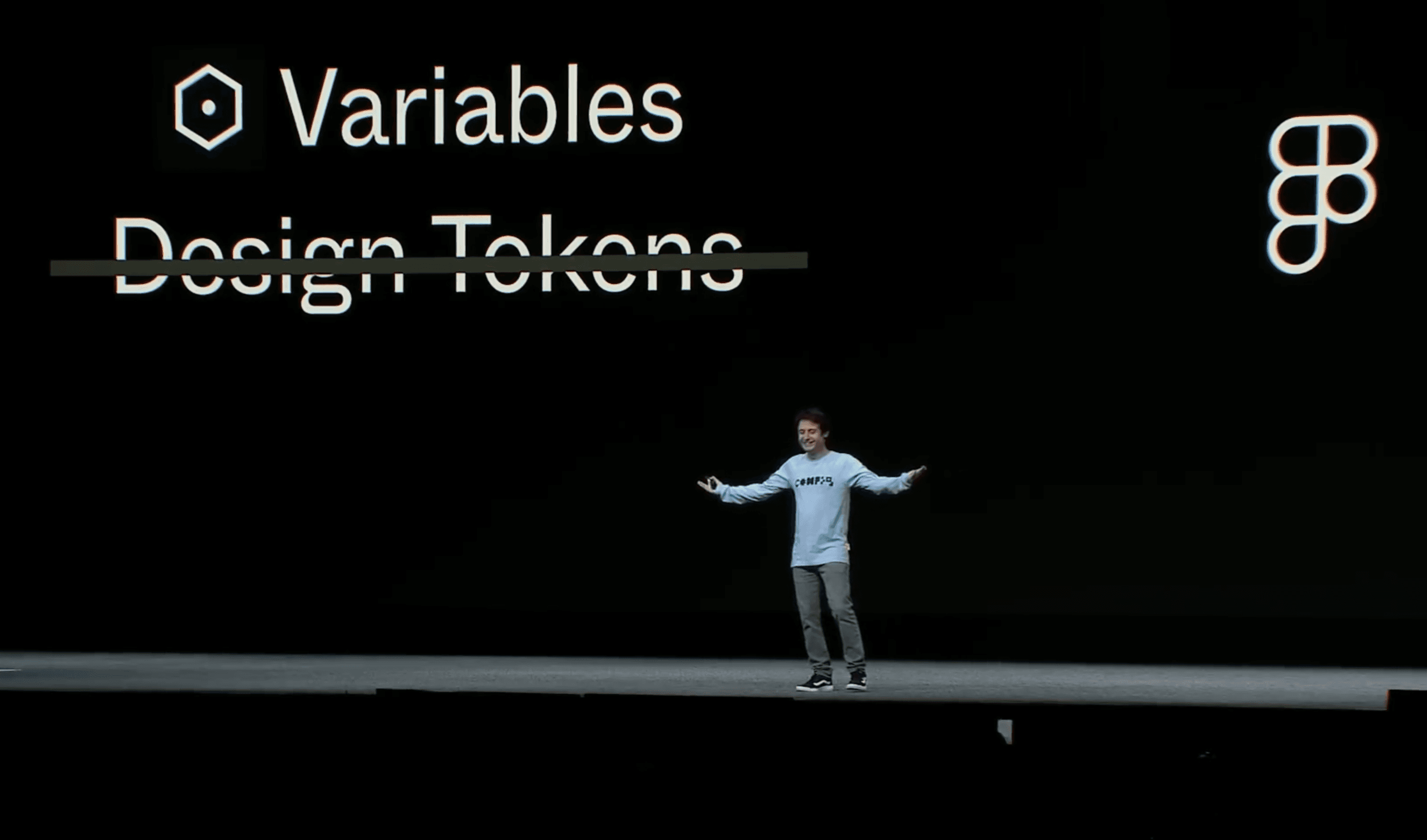
Variables feature announcement at Config 2023 by Figma CEO Dylan Field (C) Config 2023 Product Launch Keynote - Figma Youtube channel
Variables feature announcement at Config 2023 by Figma CEO Dylan Field (C) Config 2023 Product Launch Keynote - Figma Youtube channel
Variables feature announcement at Config 2023 by Figma CEO Dylan Field (C) Config 2023 Product Launch Keynote - Figma Youtube channel
The Solution
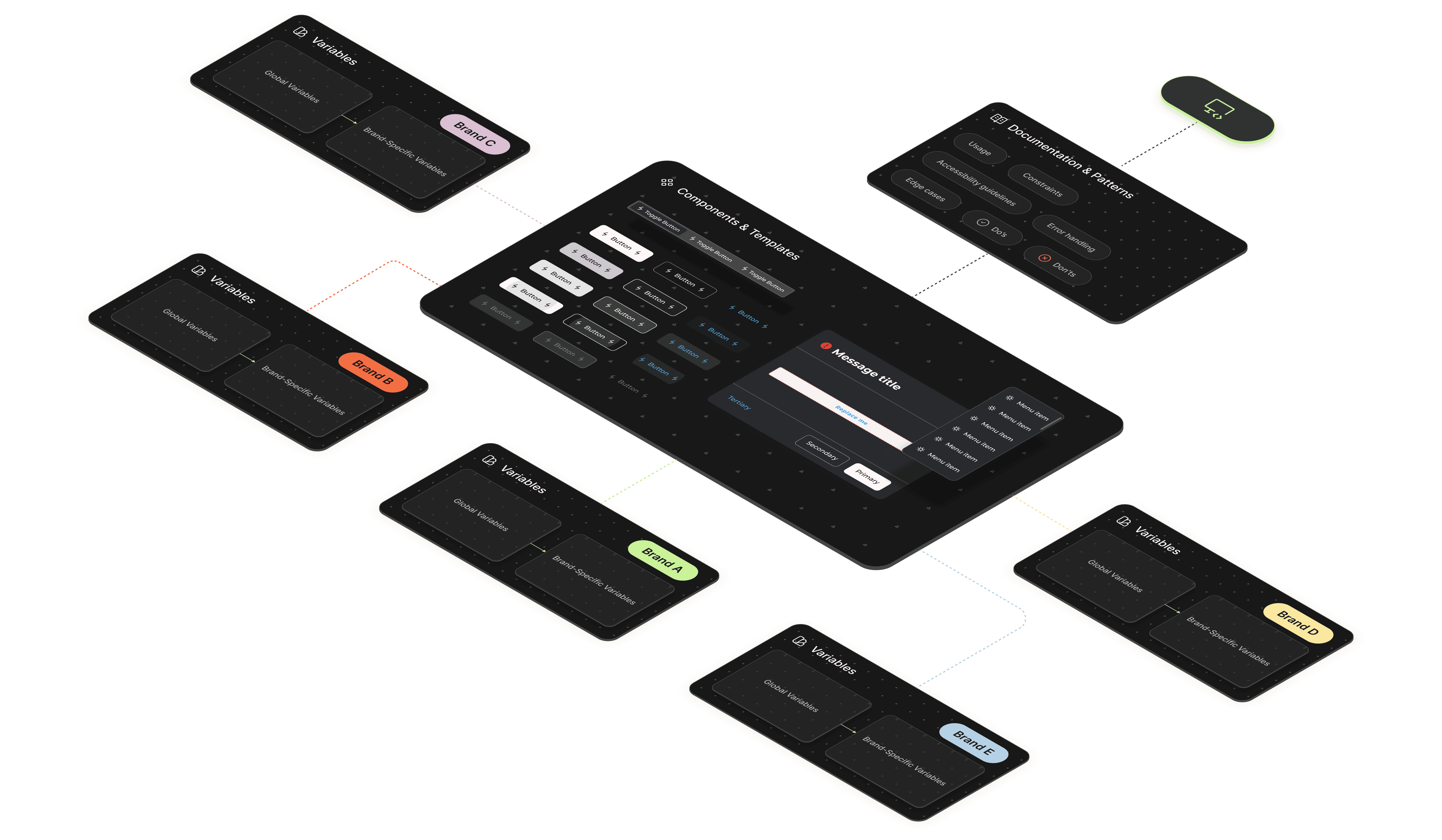
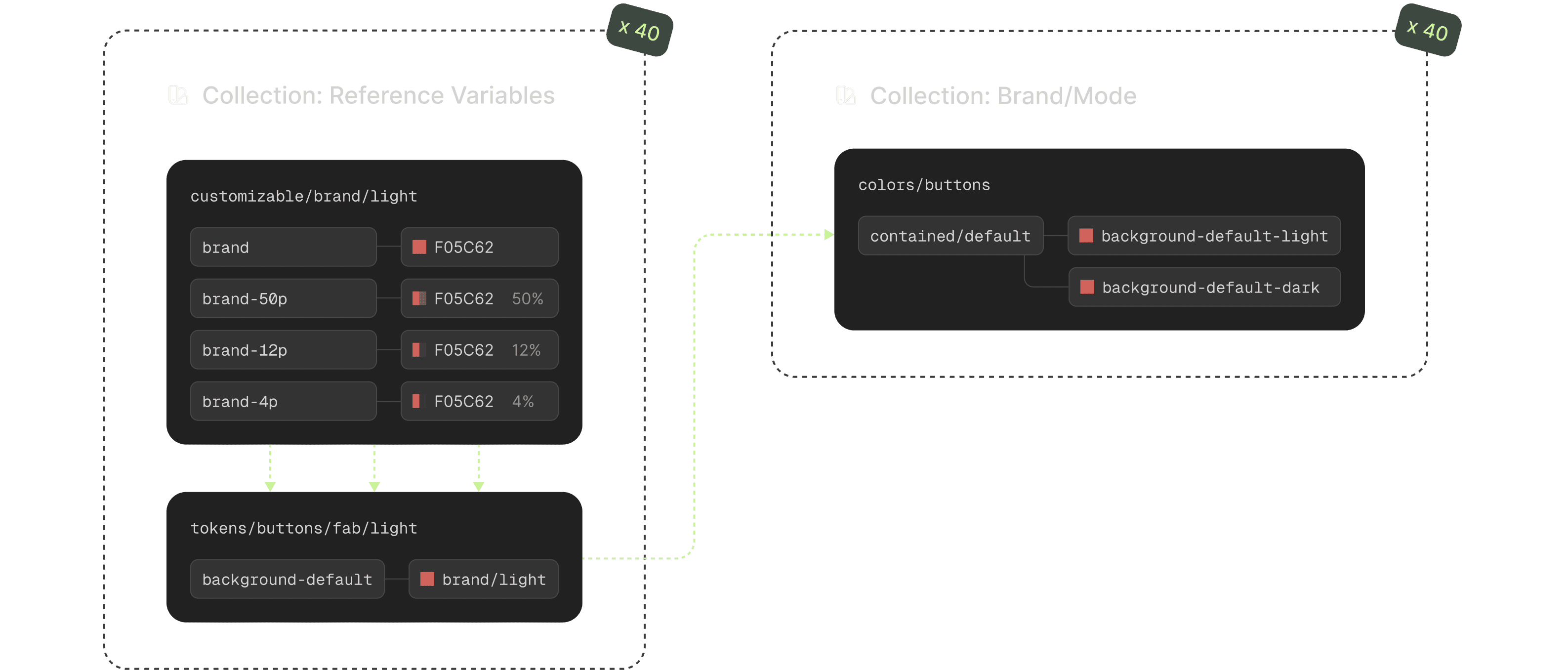
The final solution introduced a structured variable collection divided into two main groups:
Customizable variables — values that change per customer or brand
Non-customizable variables - system and component tokens that alias the customizable ones
The resulting foundation architecture looked like this:
Colors collection: customizable values that adapt for each customer
Aliased variables: system and component tokens referencing the customizable set
Modes management: enabling both client themes and light/dark mode control.
The Solution
The final solution introduced a structured variable collection divided into two main groups:
Customizable variables — values that change per customer or brand
Non-customizable variables - system and component tokens that alias the customizable ones
The resulting foundation architecture looked like this:
Colors collection: customizable values that adapt for each customer
Aliased variables: system and component tokens referencing the customizable set
Modes management: enabling both client themes and light/dark mode control.
The Solution
The final solution introduced a structured variable collection divided into two main groups:
Customizable variables — values that change per customer or brand
Non-customizable variables - system and component tokens that alias the customizable ones
The resulting foundation architecture looked like this:
Colors collection: customizable values that adapt for each customer
Aliased variables: system and component tokens referencing the customizable set
Modes management: enabling both client themes and light/dark mode control.
Training
Training played a critical role in Amdocs’ transition to Figma. We delivered 16 sessions to design teams in Israel and India, in two languages, ensuring that everyone could get up to speed with the new tool.
The program was designed to cover all essentials and support a smooth transition from previous tools.
Key elements of the training program included:
Introduction to Figma: an overview of Figma and its capabilities, highlighting the benefits of a unified design platform
Hands-On Workshops: interactive sessions where designers could practice using Figma in real scenarios
Office Hours: dedicated time to answer questions and provide additional support, ensuring teams could resolve challenges quickly
Training
Training played a critical role in Amdocs’ transition to Figma. We delivered 16 sessions to design teams in Israel and India, in two languages, ensuring that everyone could get up to speed with the new tool.
The program was designed to cover all essentials and support a smooth transition from previous tools.
Key elements of the training program included:
Introduction to Figma: an overview of Figma and its capabilities, highlighting the benefits of a unified design platform
Hands-On Workshops: interactive sessions where designers could practice using Figma in real scenarios
Office Hours: dedicated time to answer questions and provide additional support, ensuring teams could resolve challenges quickly
Training
Training played a critical role in Amdocs’ transition to Figma. We delivered 16 sessions to design teams in Israel and India, in two languages, ensuring that everyone could get up to speed with the new tool.
The program was designed to cover all essentials and support a smooth transition from previous tools.
Key elements of the training program included:
Introduction to Figma: an overview of Figma and its capabilities, highlighting the benefits of a unified design platform
Hands-On Workshops: interactive sessions where designers could practice using Figma in real scenarios
Office Hours: dedicated time to answer questions and provide additional support, ensuring teams could resolve challenges quickly
Documentation
To ensure consistency and scalability, a mini design system for documentation was designed. The documentation components were connected in prototype mode, allowing teams to explore them directly on the canvas or in presentation view - making documentation more interactive and accessible.
Using Figma variables, we also made the documentation themeable, so it could easily adapt to different brand guidelines and could be changed with the mode switch, just like the designs.
Documentation
To ensure consistency and scalability, a mini design system for documentation was designed. The documentation components were connected in prototype mode, allowing teams to explore them directly on the canvas or in presentation view - making documentation more interactive and accessible.
Using Figma variables, we also made the documentation themeable, so it could easily adapt to different brand guidelines and could be changed with the mode switch, just like the designs.
Documentation
To ensure consistency and scalability, a mini design system for documentation was designed. The documentation components were connected in prototype mode, allowing teams to explore them directly on the canvas or in presentation view - making documentation more interactive and accessible.
Using Figma variables, we also made the documentation themeable, so it could easily adapt to different brand guidelines and could be changed with the mode switch, just like the designs.
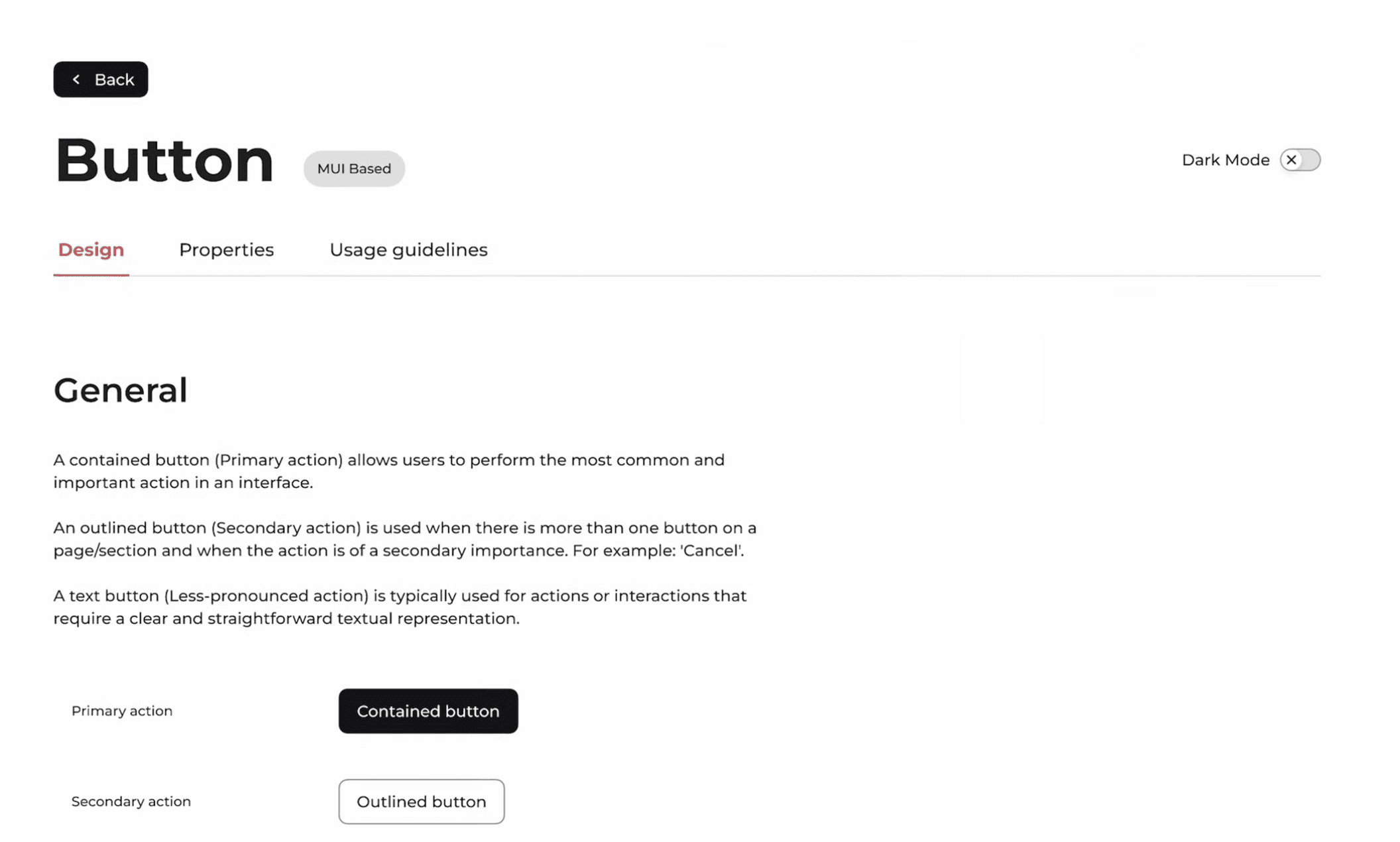
Interactive documentation for a Button component
Interactive documentation for a Button component
Interactive documentation for a Button component
Impact & Results
The new Figma-based design system transformed how Amdocs teams collaborate and scale design. By consolidating tools, introducing scalable components, and implementing a variable-driven multi-brand architecture, Amdocs design teams reduced redundancy and significantly improved efficiency.
12
Teams using library
173
Total components
26,300
Activity 1st week of the release
70
Designers across 2 countries
150
Supported brands yearly
Impact & Results
The new Figma-based design system transformed how Amdocs teams collaborate and scale design. By consolidating tools, introducing scalable components, and implementing a variable-driven multi-brand architecture, Amdocs design teams reduced redundancy and significantly improved efficiency.
12
Teams using library
173
Total components
26,300
Activity 1st week of the release
70
Designers across 2 countries
150
Supported brands yearly
Impact & Results
The new Figma-based design system transformed how Amdocs teams collaborate and scale design. By consolidating tools, introducing scalable components, and implementing a variable-driven multi-brand architecture, Amdocs design teams reduced redundancy and significantly improved efficiency.
12
Teams using library
173
Total components
26,300
Activity 1st week of the release
70
Designers across 2 countries
150
Supported brands yearly
It now takes about 5 minutes to add a new brand to the Design System
It now takes about 5 minutes to add a new brand to the Design System
It now takes about 5 minutes to add a new brand to the Design System
Reflection
This project reinforced the importance of approaching system design as both a technical and organizational transformation. Migrating to Figma wasn’t just about moving files - it was about reshaping how 70+ designers collaborate, make decisions, and maintain consistency across 150 brands.
It also offered a rare opportunity to explore and stress-test Figma’s newest capabilities, including the then brand-new Variables feature announced at Config 2023. Working with an untested feature at scale required experimentation, patience, and creative problem-solving. Through extensive testing, we established reliable patterns for multi-brand theming and light/dark mode management - insights that proved valuable not only to Amdocs but to future system implementations as well.
It taught me how crucial it is to balance flexibility with governance: building a system that’s scalable and efficient, yet adaptable enough to handle constant change. Working closely with cross-functional teams also deepened my appreciation for clear documentation, structured onboarding, and the power of shared ownership in driving adoption.
Reflection
This project reinforced the importance of approaching system design as both a technical and organizational transformation. Migrating to Figma wasn’t just about moving files - it was about reshaping how 70+ designers collaborate, make decisions, and maintain consistency across 150 brands.
It also offered a rare opportunity to explore and stress-test Figma’s newest capabilities, including the then brand-new Variables feature announced at Config 2023. Working with an untested feature at scale required experimentation, patience, and creative problem-solving. Through extensive testing, we established reliable patterns for multi-brand theming and light/dark mode management - insights that proved valuable not only to Amdocs but to future system implementations as well.
It taught me how crucial it is to balance flexibility with governance: building a system that’s scalable and efficient, yet adaptable enough to handle constant change. Working closely with cross-functional teams also deepened my appreciation for clear documentation, structured onboarding, and the power of shared ownership in driving adoption.
Reflection
This project reinforced the importance of approaching system design as both a technical and organizational transformation. Migrating to Figma wasn’t just about moving files - it was about reshaping how 70+ designers collaborate, make decisions, and maintain consistency across 150 brands.
It also offered a rare opportunity to explore and stress-test Figma’s newest capabilities, including the then brand-new Variables feature announced at Config 2023. Working with an untested feature at scale required experimentation, patience, and creative problem-solving. Through extensive testing, we established reliable patterns for multi-brand theming and light/dark mode management - insights that proved valuable not only to Amdocs but to future system implementations as well.
It taught me how crucial it is to balance flexibility with governance: building a system that’s scalable and efficient, yet adaptable enough to handle constant change. Working closely with cross-functional teams also deepened my appreciation for clear documentation, structured onboarding, and the power of shared ownership in driving adoption.
Made with ❤️ In Israel © 2025 Julia Skigar. All rights reserved.
Made with ❤️ In Israel © 2025 Julia Skigar. All rights reserved.
Made with ❤️ In Israel © 2025 Julia Skigar. All rights reserved.